
Few things can alter our state of mind as quickly as sound.
A stressful day can seem to soften when rain begins tapping against a window. The steady rhythm of waves rolling onto a shoreline has a way of slowing restless thoughts. Birdsong drifting through a quiet morning, the crackle of a fire on a winter evening, or the distant ringing of a temple bell can create an atmosphere that feels instantly familiar and reassuring, even when we struggle to explain exactly why.
Our relationship with sound runs far deeper than entertainment.
Long before there were recording studios, streaming platforms or even a formal language for describing music, human beings were already using sound to mark important moments in life. Songs accompanied celebrations and ceremonies. Rhythms brought communities together. Simple instruments were used during storytelling, prayer and reflection. Across different cultures and continents, people recognised something powerful about sound's ability to influence emotion, attention and memory.
Modern research has provided some insight into why certain sounds feel particularly soothing, but many of the underlying observations would not have surprised our ancestors. The human nervous system responds differently to predictable, flowing patterns than it does to abrupt interruptions and constant stimulation. Gentle repetition gives the mind something stable to settle upon. Rather than continually jumping from one thought to another, attention begins to anchor itself to a single sensory experience.
Anyone who has sat beside a river for an hour without feeling the need to check the time understands this instinctively.
The river itself is not demanding anything from us. It is not asking for decisions, responses or effort. Its sound unfolds naturally, neither seeking attention nor competing for it, and in doing so creates space for the mind to become quieter.
Music can produce a remarkably similar effect.
Interestingly, the sounds that many people find calming are often not the most technically impressive. Modern culture tends to celebrate complexity. We admire virtuoso performers, elaborate compositions and extraordinary displays of skill. There is certainly beauty in those things, but there is a different kind of beauty in simplicity.
A handful of notes played thoughtfully can sometimes be more affecting than an entire orchestra. Simplicity creates room for listening.
When there are fewer elements competing for our attention, we begin to notice details that might otherwise pass unnoticed. The subtle vibration of a note. The way one tone interacts with another. The lingering resonance that remains after a sound appears to have ended. Silence itself becomes part of the experience rather than merely the absence of sound.
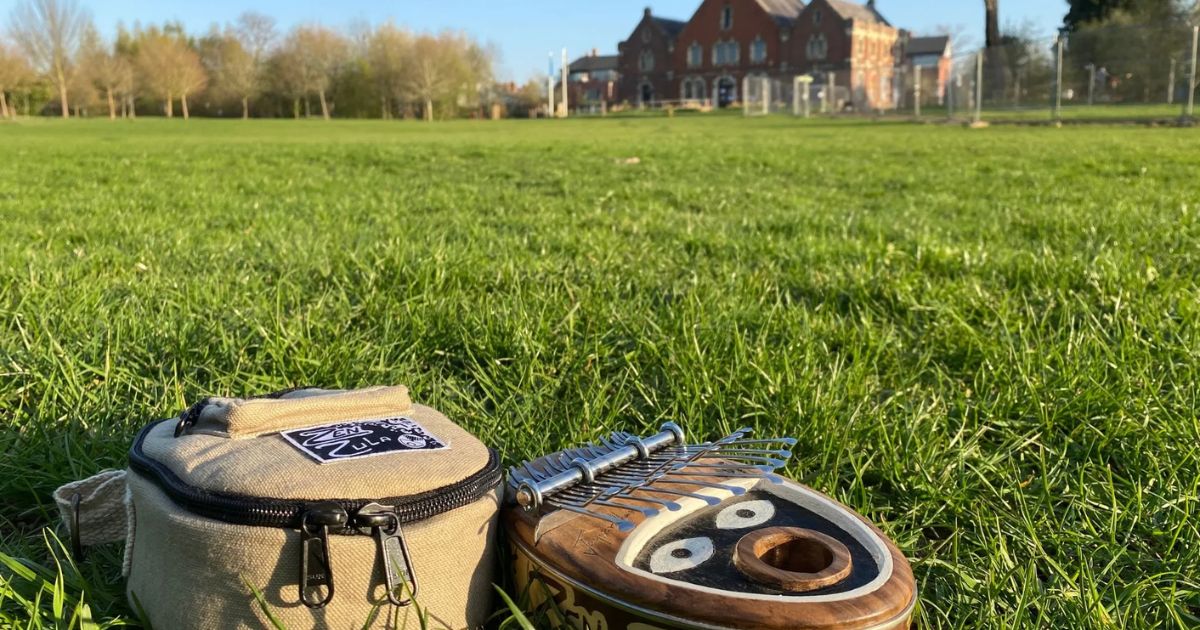
This is one of the qualities that first drew us to the Mbira, the African thumb piano that inspired the Zenzula.
At first glance, the instrument appears almost deceptively simple. Metal keys mounted on a wooden body are plucked gently with the thumbs to produce bright, bell-like notes. There is no elaborate mechanism hiding beneath the surface and no visual complexity competing for attention. Yet the moment the instrument is played, something unexpected happens.
The notes seem to linger in the air longer than anticipated.
Harmonics begin to emerge beneath the primary tone. Vibrations interact with one another. Resonances overlap and evolve. A single note can reveal layers of sound that continue unfolding even after the thumb has left the key.
People often struggle to describe the experience accurately because it occupies a space somewhere between hearing and feeling. Over the years we have heard the same descriptions repeated by people from very different backgrounds. Some describe the sound as sparkling. Others call it meditative, hypnotic or dreamlike. Children are often fascinated by it within seconds because it feels intuitive and playful. Experienced musicians become absorbed by the intricate relationships between notes and overtones. Yet despite these different perspectives, the response is surprisingly consistent: people simply enjoy spending time with the sound.
Part of that appeal may lie in the fact that the instrument asks very little of the player.
There is no expectation of mastery before enjoyment can begin. No requirement to read music. No pressure to perform for an audience or achieve technical perfection. A few notes played slowly and attentively are often enough to create something beautiful.
As a result, the focus gradually shifts away from achievement and towards exploration.
Many players discover that the most rewarding aspect of the experience is not producing music for others but listening more carefully for themselves. The resonance between notes, the evolving harmonics and the subtle variations that emerge during play become sources of fascination in their own right.
This may be where science and experience meet.
Researchers may speak about resonance, vibration and attention. Musicians may speak about calmness, presence and inspiration. The vocabulary differs, but both perspectives point towards the same observation: sound has a profound influence on the way we experience the present moment.
At Zenzula, this understanding informs every instrument we make. Craftsmanship, tuning and materials are important, but they are not the entire story. What interests us most is the experience that unfolds once the instrument leaves the workshop and enters someone's daily life.
- Can it encourage a moment of curiosity?
- Can it help someone disconnect from the noise of the day for a few minutes?
- Can it transform an ordinary evening into something a little more memorable?
These questions guide our work as much as any technical consideration.
The calming quality people often associate with the instrument is not the result of magic, nor is it something that can be measured solely through frequencies and acoustics. It emerges from a quieter and perhaps more valuable experience: the opportunity to pause, listen and give full attention to a single moment.
In a world where almost everything competes for our focus, that simple act has become increasingly rare. And sometimes, all it takes is a handful of notes and a willing listener to remember what it feels like.