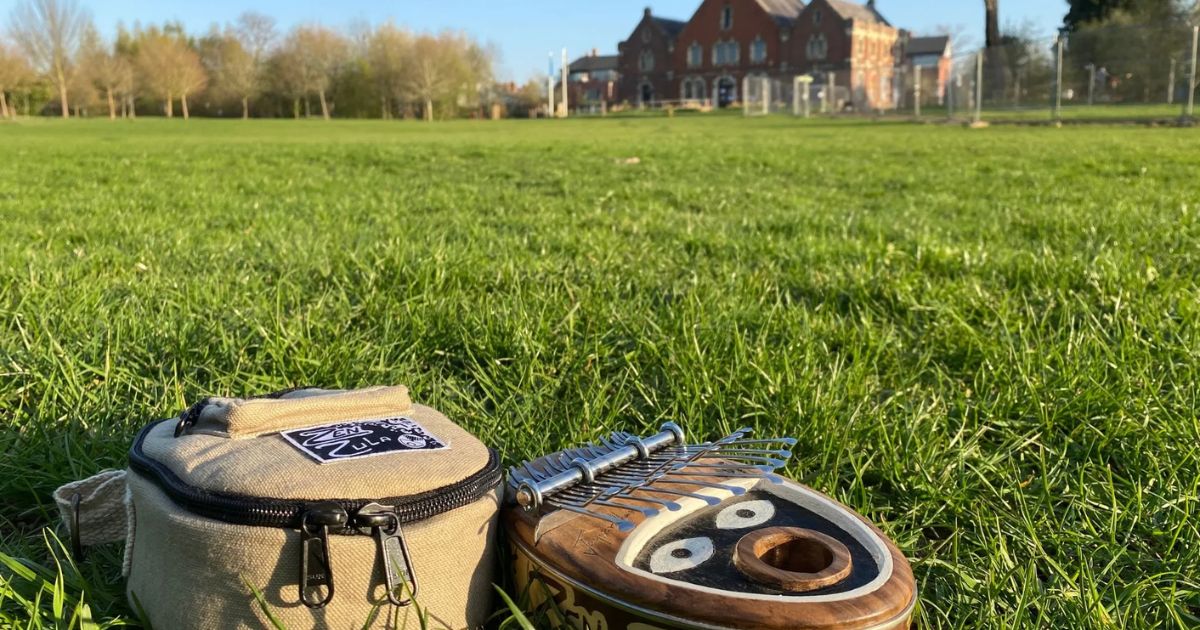
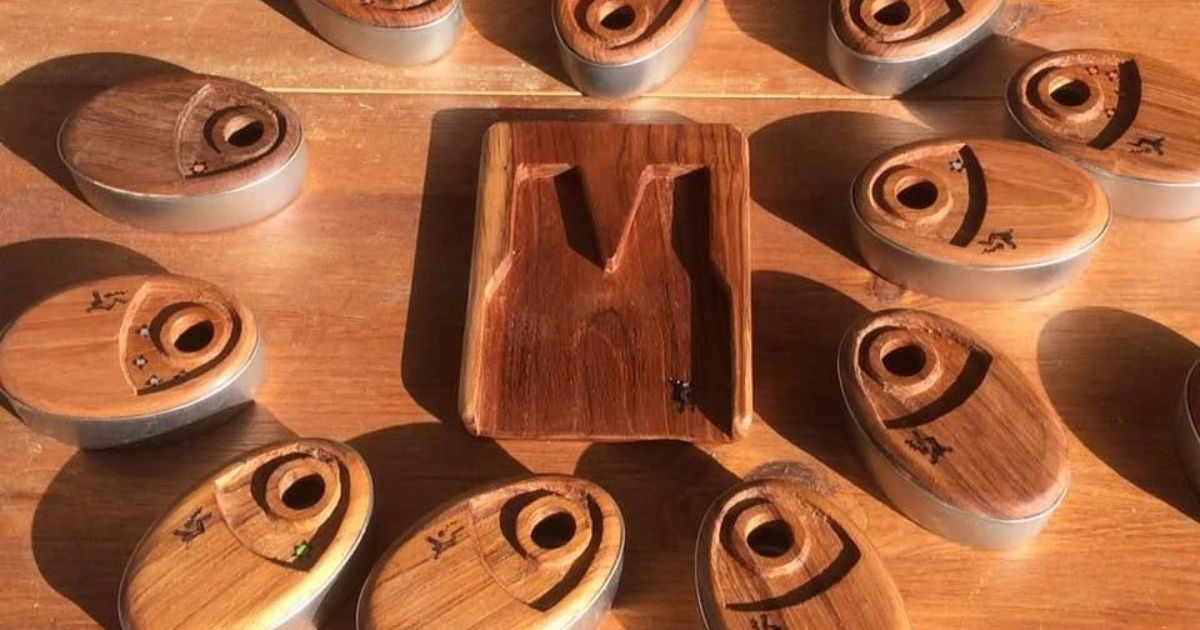
Every Zenzula begins as a collection of humble materials: reclaimed wood, discarded metal, and the simple intention to create something meaningful.
At first glance, there is little to suggest what these materials might become. A weathered piece of hardwood bearing the marks of a previous life. A metal container that has already fulfilled its original purpose. A length of spring steel waiting patiently to be shaped and tuned. Individually, they appear ordinary, but somewhere between the first cut and the final note, a transformation takes place. These modest materials become something capable of carrying sound, memory and emotion.
In a world increasingly shaped by automation, efficiency and mass production, we have chosen a slower path. Not because it is easier, but because certain things are worth taking time over.
Each Zenzula is carved, sanded, tuned, polished and tested entirely by hand in our Bombay workshop. The process takes days rather than minutes and unfolds through countless small decisions that can only be made by an experienced maker working directly with the materials in front of them. There are no production lines, no moulds and no attempt to make one instrument indistinguishable from the next. Every curve, every finish and every note emerges through a process guided by touch, judgement and patience rather than automation.
It would undoubtedly be faster to mechanise much of this work. Standardisation offers predictability and consistency, and machines are exceptionally good at repeating the same task over and over again. What they cannot reproduce is character.
When an object is crafted entirely by hand, it carries traces of the person who made it. The subtle marks left by tools, the grain patterns revealed during sanding, the tiny variations in resonance that emerge as an instrument is tuned; these details cannot be manufactured into existence. They arise naturally through the relationship between material, craftsmanship and time.
Over the years, making instruments has taught us that perfection is often a surprisingly poor measure of value.
Some of the objects people treasure most would never meet the standards of modern perfection. A favourite book whose corners have softened through years of reading. A wooden table marked by countless family meals. A handwritten letter whose charm lies precisely in the fact that no machine could have produced it. Their imperfections do not diminish their value; they deepen it, because they tell a story.
The Japanese philosophy of wabi-sabi expresses this idea beautifully. Rather than pursuing flawless surfaces and perfect uniformity, it encourages an appreciation for authenticity, impermanence and individuality. It recognises that beauty often resides in character rather than perfection, and that the marks left by time can make an object more meaningful rather than less.
We find ourselves returning to this philosophy often in our own work.
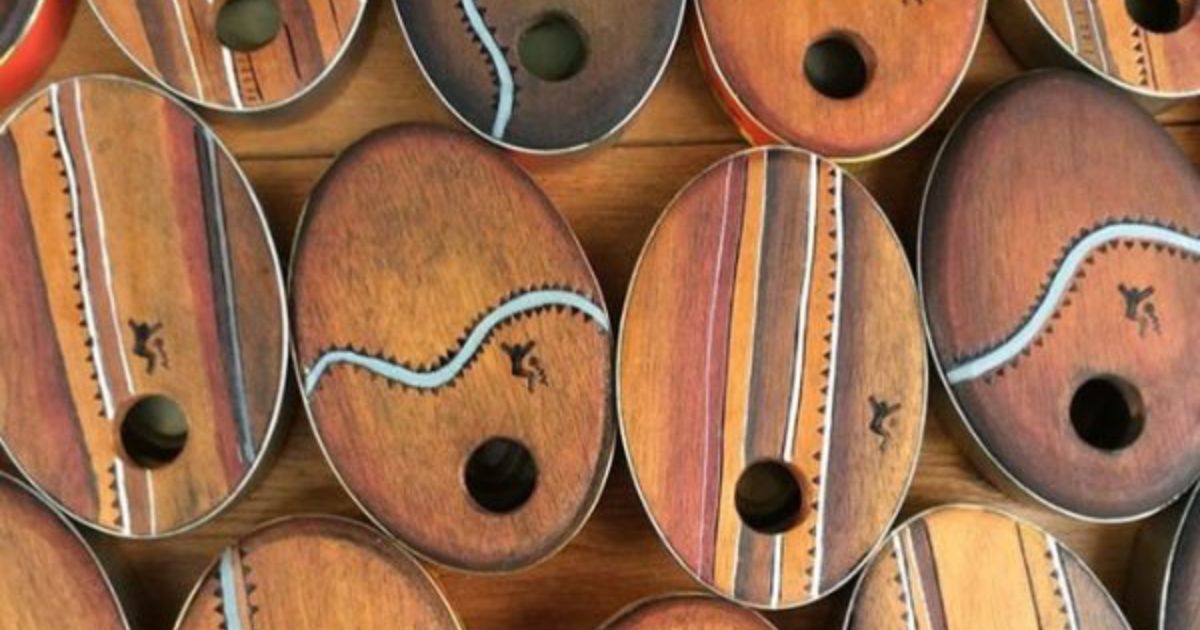
Every Zenzula develops a personality of its own. One piece of wood may produce a warmer tone, while another reveals an unexpected grain pattern that influences the final appearance of the instrument. A hand-painted finish may settle differently depending on the texture beneath it. No matter how carefully the same process is followed, no two instruments emerge exactly alike.
Rather than viewing this as a limitation, we regard it as one of the greatest rewards of handmade craftsmanship.
When someone chooses a Zenzula, they are not selecting a product from an endless stream of identical objects. They are choosing a singular instrument whose appearance, resonance and character belong uniquely to that moment in its creation. Another instrument may share the same design, but it will never be precisely the same.
Perhaps this is one reason handmade objects continue to resonate with people even in an age of technological abundance. They reflect something fundamental about human experience. None of us are identical. Time leaves its mark on all of us, and our stories are shaped by countless small moments that can never be repeated. The individuality we recognise in a handcrafted object feels familiar because it mirrors the individuality we recognise in ourselves.